Recent Articles
May 2026 | Opening Article
What Does a Friend and a Merchant Have in Common? Changatham as an Economic Archive of Early Modern Malabar
Afeef Ahmed, Harvard University
Volume I | Number IV | Pages 1-6
November 2025 | Opening Article
Intellectual History as Political History
Sam Phoenix Clarke, University of Cambridge
Volume I | Number II | Pages 1-7
November 2025 | Research Commentary
Performing Sovereignty: Political Authority in the Postcolony
Dr. Muhammad Suhail Mohamed Yazid, Harvard University
Volume I | Number II | Pages 8-17
November 2025 | Research Commentary
Caste Power, Land Politics, and Urban Inequality in Post-Liberalised India
Dr. Ajay Kumar Gautam, Kautilya School of Public Policy India
Volume I | Number II | Pages 18-30
November 2025 | Methods & Approaches
Why microhistory matters: Meaning, method, and significance
Dr. Riya Gupta, Jawaharlal Nehru University (JNU)
Volume I | Number II
August 2025 | Research Commentary
Empire’s Labouring Women
Urvi Khaitan, Harvard University
Volume I | Number I | Pages 3-14
August 2025 | Research Commentary
Whither Goes “Indian Secularism”?
Rohit Dutta Roy, University of Cambridge
Volume I | Number I | Pages 88-92
From the Editor
The Cyclical Return: Rethinking Inequality as a Long- Wave Phenomenon
For much of the twentieth century, the study of economic inequality revolved around the search for a singular and secular trend, whether framed as Simon Kuznets’ optimistic inverted‑U[2] (whereby inequality would naturally fall with maturity) or, more recently, as Thomas Piketty’s formulation of r > g[3] as a driver of inexorable divergence. In recent years, a subtle but consequential consensus has taken shape within the field that attempts to reconcile these opposing visions by conceding that inequality can fall but insisting that it does so almost exclusively through the exogenous violence of war, revolution, or economic depression…
Letter from the Editor-in-Chief, August 2025
To our readers, It is with a deep sense of responsibility and earnest anticipation that I place before the learned reader the first number of the Economic & Political History Review. The founding of this journal arises from the conviction that the economic and political histories of India and South Asia deserve systematic and sustained scholarly attention, and that such inquiry should be pursued with the utmost care for accuracy, clarity, and balance…….
In “Literary Intervention”
Deep Priya Pabbi, 15 August 2025
One day, working in the kitchen, for the first time my mother asked me to reduce the amount of jeera (cumin) I was about to add to the tempering for dal. I could not comprehend the gentle orders. “Jeera is expensive these days”, she commented after seeing my confused look. With a more confused look I said, “What?”. “Hey Bhagwan, what a dumb daughter I have!”, I bet she must have thought. She explained, because Jeera is expensive these days we should use it less, so that those who cannot afford it, are also able to buy it……..
Announcements
Submissions for EPHR’s 5th Issue, releasing in August 2026, are currently open. Submissions are open for Research Commentaries, Research Notes, and Historiographical Essays on themes such as Agrarian and Industrial History, Colonial and Post Colonial Histories, Gender and Labour Markets, Intellectual and knowledge Histories, State Formation and Bureaucracy, Archives and Methods, and Demography.
Two opening essays are also invited from scholars on the theme of “Forgotten thinkers”.
Abstract Deadline: 29 July 2026
Submit Abstract at editor@ephr.in
Foundational Works
Historical Approach to Economics by Isaac A. Loos in The American Economic Review in 1918.
What Is Economic History: Comment by Harold F. Williamson in The Journal of Economic History in 1944.
Economic History and Economics by Robert M. Solow in The American Economic Review in 1985.
Statistics and Economic History by Simon Kuznets in The Journal of Economic History in 1941.
Intellectual History: Its Aims and Methods by Felix Gilbert in Historical Studies Today in 1971.
The “New Political History”: A Methodological CritiqueJ by Morgan Kousser in Reviews in American History in 1976.
On Political Methodology by Gary King in Political Analysis in 1990.
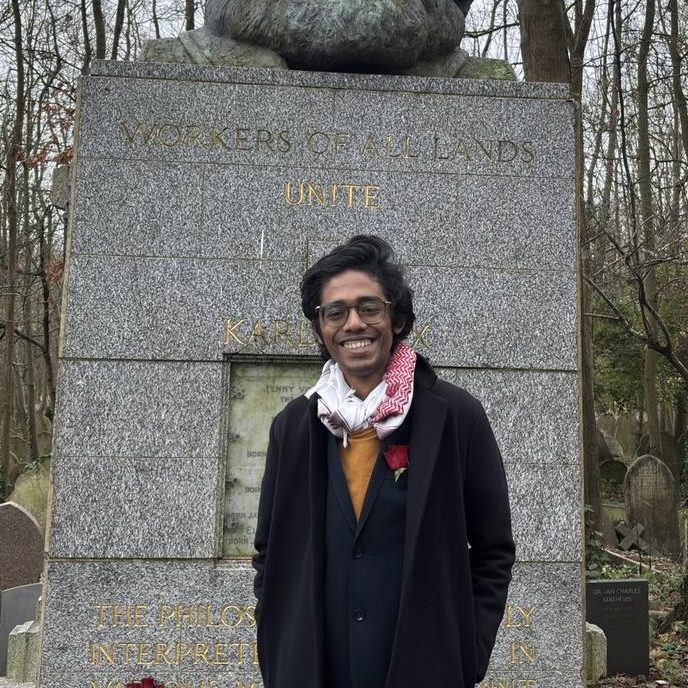
Meet Our Editors
 Gurjap Singh, The London School of Economics and Political Science






Recent Issue